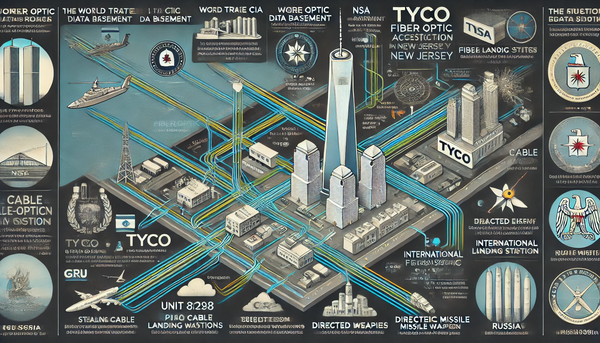
NSA - Files redirected WTC 9/11/01
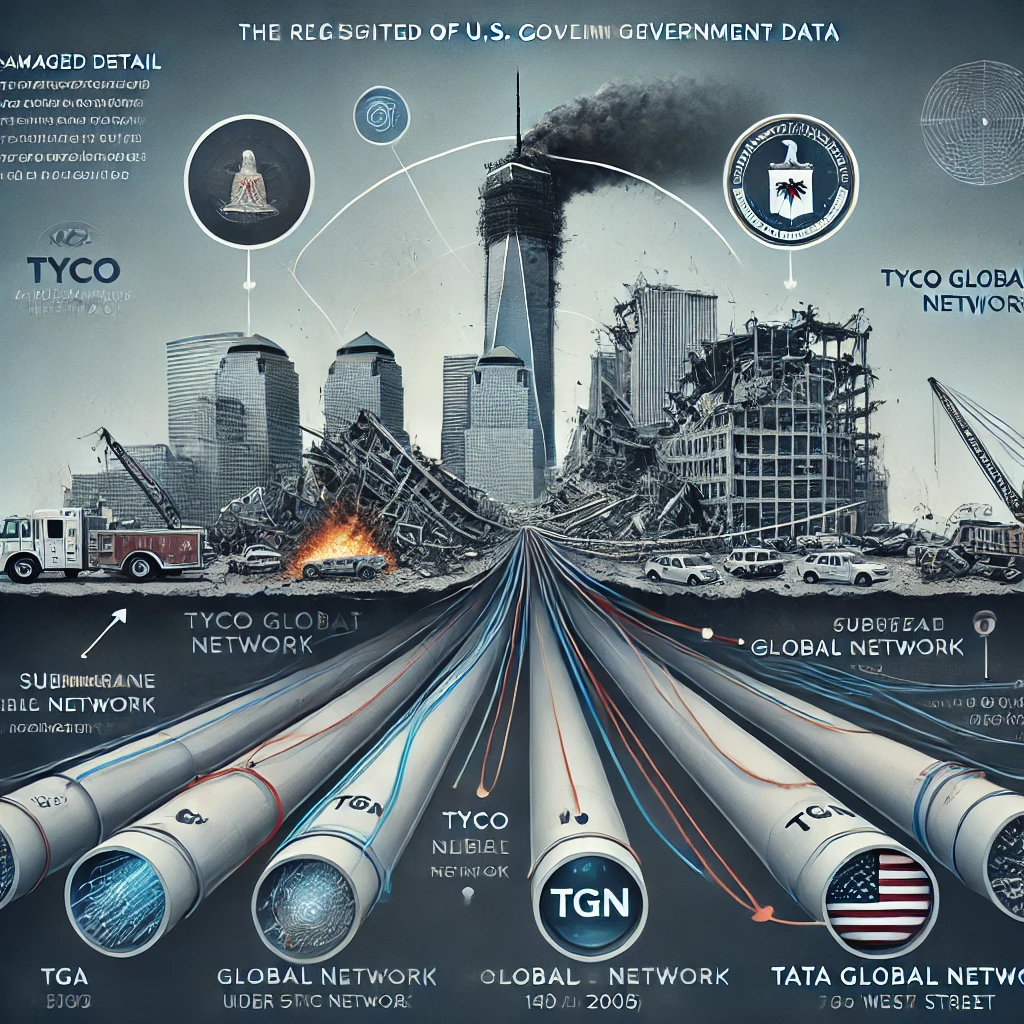
Report: Potential Security Risk of Classified U.S. Government Data Routed via Tyco Global Network
Prepared for: U.S. National Security Oversight Review
Prepared by: Jerri L Dietz
Date: May 12, 2025
Classification: CONFIDENTIAL (For Internal Review Only)
1. Executive Summary
In the aftermath of the September 11, 2001, terrorist attacks, critical telecommunications infrastructure in Lower Manhattan was destroyed, necessitating the rapid rerouting of data traffic, including potentially sensitive communications from agencies such as the NSA, CIA, and DoD. One of the alternative pathways utilized was the Tyco Global Network (TGN), a privately-owned international submarine cable system operated by Tyco International Ltd. In 2005, TGN was acquired by India’s Videsh Sanchar Nigam Limited (VSNL), later rebranded as Tata Communications. This acquisition raises concerns about the potential exposure of classified U.S. government data to foreign entities.
2. Background
• Tyco Global Network (TGN): Completed in 2001, TGN was a high-capacity fiber-optic network connecting North America, Europe, and Asia. It included transatlantic cables with landing points in Wall Township, New Jersey, and Highbridge, Somerset, United Kingdom.
• Acquisition by VSNL: In 2005, VSNL, a Tata Group company, acquired TGN for $130 million. This acquisition provided VSNL with a 60,000 km undersea cable network, enhancing its global telecommunications capabilities.
3. Risk Assessment
A. Emergency Rerouting Post-9/11
The destruction of key telecommunications hubs in New York City led to the emergency rerouting of data traffic through surviving networks, including TGN. Given the urgency, some communications may have been transmitted without standard encryption protocols, increasing the risk of interception.
B. Foreign Ownership and Access
Post-acquisition, TGN became part of Tata Communications, an Indian multinational company. While there is no public evidence of data interception, the change in ownership raises concerns about potential access to historical data logs and metadata by foreign entities.
C. Potential Intelligence Exposure
Even without direct access to content, metadata analysis can reveal sensitive information such as communication patterns, operational timelines, and inter-agency relationships. This information could be valuable to foreign intelligence services.
4. Recommendations
1. Comprehensive Audit: Conduct a thorough review of data routing during the post-9/11 period to identify potential vulnerabilities.
2. Data Encryption Review: Assess the encryption standards used during emergency rerouting to ensure data integrity.
3. Access Controls: Implement stricter access controls and monitoring of foreign-owned telecommunications infrastructure handling sensitive data.
4. Policy Development: Develop policies to minimize reliance on foreign-owned networks for transmitting classified information.
Conclusion
The emergency rerouting of data through TGN post-9/11, followed by its acquisition by a foreign entity, underscores the need for vigilant assessment of telecommunications infrastructure used by U.S. government agencies. Proactive measures are essential to safeguard national security interests.
Note: This report is based on publicly available information