How Signit Could be Reverse Engineered
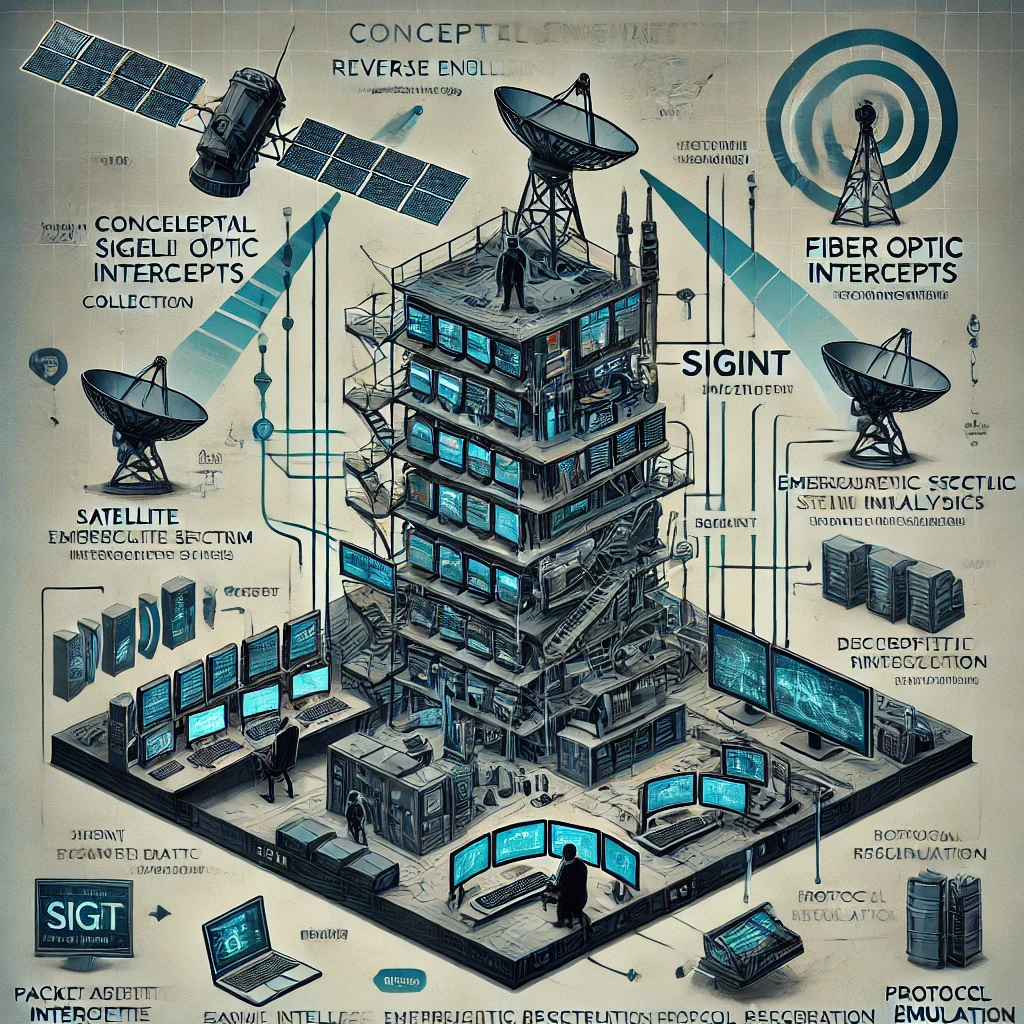
Reverse engineering SIGINT (Signals Intelligence) systems typically involves a mix of technical access, hardware/software duplication, insider knowledge, and deep expertise in telecommunications and cryptographic analysis. Here’s how foreign actors—particularly state intelligence services like Israel’s Unit 8200—have been assessed to reverse-engineer U.S. SIGINT systems:
1. Access to Exported Technologies
• Legal access: U.S. companies often export lawful intercept systems (e.g., Narus, Verint/Comverse) to allies.
• Once deployed, foreign partners can analyze the software and hardware, identify data flows, and learn how U.S. SIGINT captures, filters, and stores communications.
Example:
• Verint and Amdocs, Israeli firms with contracts in U.S. telecom infrastructure, had proximity to voice and metadata routing systems, which were architecturally similar to those used by the NSA.
2. Exploiting Partnerships and Joint Development
• Iron Dome, David’s Sling, and other systems co-developed with the U.S. gave Israeli engineers direct insight into U.S. radar, missile-tracking, and secure data-link systems.
• This technical closeness made it easier to adapt core SIGINT methods used in battlefield and strategic monitoring.
3. Insider Leaks and Knowledge Transfer
• Former intelligence contractors or consultants from Western nations occasionally work with foreign firms or governments.
• These insiders may bring:
• Architectural knowledge of data acquisition points
• Software logic from collection platforms
• Techniques like deep packet inspection, voice fingerprinting, and real-time satellite intercepts
4. Deep Packet Inspection a Telecom Integration
• Systems like NarusInsight (later acquired by Boeing) were deployed in large telecom networks. Israel-based engineers and operators reportedly used these tools to:
• Learn how metadata and content are separated
• Reverse engineer NSA-style filtering algorithms
• Create similar capabilities for foreign use, especially for surveillance on internal and regional targets
5. Reconstructing from Targeted Data Leaks
• Leaked U.S. tools (e.g., via Shadow Brokers, Snowden files) included code and architecture diagrams.
• Foreign intelligence services could rebuild these tools and adapt them to their own needs.
6. Signals Intercept & Replay
• Using satellite dish arrays or submarine cable taps, actors like Russia, China, or Israel intercept U.S. signals and analyze:
• Signal modulation
• Encryption standards
• Transmission protocols
This data allows the construction of emulators that imitate U.S. intercept platforms and testing environments for training operators.
7. AI and Pattern Recognition Enhancements
• With exposure to NSA-style bulk collection, foreign actors have applied machine learning to improve:
• Voice recognition
• Behavioral pattern tracking
• Linguistic analysis (especially for English or Arab communications)
If you’d like, I can map which systems or methods were likely reconstructed by each nation (e.g., China’s Great Firewall using U.S. DPI tech, or Russia’s SORM influenced by U.S. telecom intercepts). Would you like that breakdown?