CIA Files rerouted by NSA on 9/11/01
Title:
Potential Security Risks of NSA Data Routed from WTC via Tyco Cable System: Foreign Interception Analysis
Date
May 13, 2025
Prepared for:
Private Review of Telecommunications and National Security Concerns
Overview:
On September 11, 2001, secure communications infrastructure—allegedly located in the basement of the World Trade Center (CIA operations)—may have relayed intelligence traffic through the NSA and onto commercial fiber optic infrastructure maintained by Tyco Submarine Systems in Wall Township, New Jersey.
This report evaluates the possible exposure of such traffic to foreign interception, focusing on known actors with advanced capabilities.
1. Route Summary:
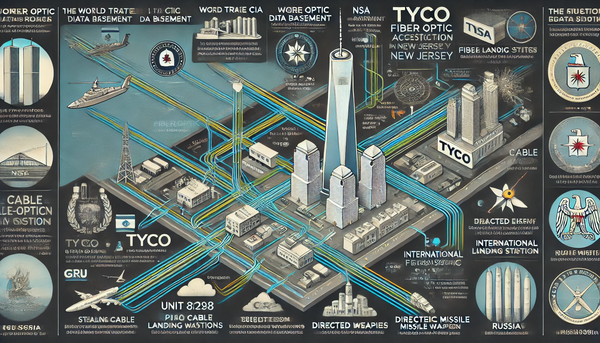
• Origin: CIA-linked facility, WTC Basement, NYC
• Transit Node: NSA routing infrastructure (domestic)
• Fiber Gateway: Tyco Cable Landing Station, Wall Township, NJ
• International Route: Undersea fiber optic cable leading across the Atlantic
2. Foreign Actor Proximity and Capability Analysis:
Israel (Unit 8200 / Mossad)
• Proximity: High – several Israeli firms (e.g., Verint, Amdocs) held U.S. telecom service contracts.
• Technical Capability: Advanced—known to engage in lawful intercept, signal intelligence (SIGINT), and signal processing.
• Risk Level: Very High
• Note: Only foreign actor with possible direct proximity to NJ fiber routing via vendor relationships.
United Kingdom (GCHQ)
• Proximity: Remote – likely interception at UK cable landing station.
• Technical Capability: Extensive—shared SIGINT agreements under Five Eyes (FVEY).
• Risk Level: Moderate
• Note: May share intercepted data under intelligence-sharing frameworks.
Russia (FSB)
• Proximity: No direct access to NJ cables.
• Technical Capability: Strong in cyber operations; submarine cable tapping capability exists.
• Risk Level: Moderate (at downstream nodes)
China (MSS)
• Proximity: Remote – no presence at U.S. landing stations.
• Technical Capability: Capable of passive undersea tapping; aggressive in global cable contracts.
• Risk Level: Moderate to Low
3. Potential Intelligence Exposure:
Data relayed through this system could have included:
• Counter-terrorism intelligence
• CIA/NSA cooperative programs
• Covert operations metadata
• Government secure communications
Any breach, even passive interception, could enable:
• Blackmail
• Compromised field operations
• Foreign reverse-engineering of SIGINT tools
https://nap.nationalacademies.org/read/10569/chapter/4#23
4. Conclusion:
Israel’s Unit 8200/Mossad stands out as the only foreign actor with a feasible combination of (1) direct access proximity via commercial partnerships and (2) technical capability to intercept data routed through Tyco’s New Jersey fiber optic cable landing station. Other actors like the UK, Russia, and China may have had downstream opportunities, but not in the initial U.S. segment.
Attachment:
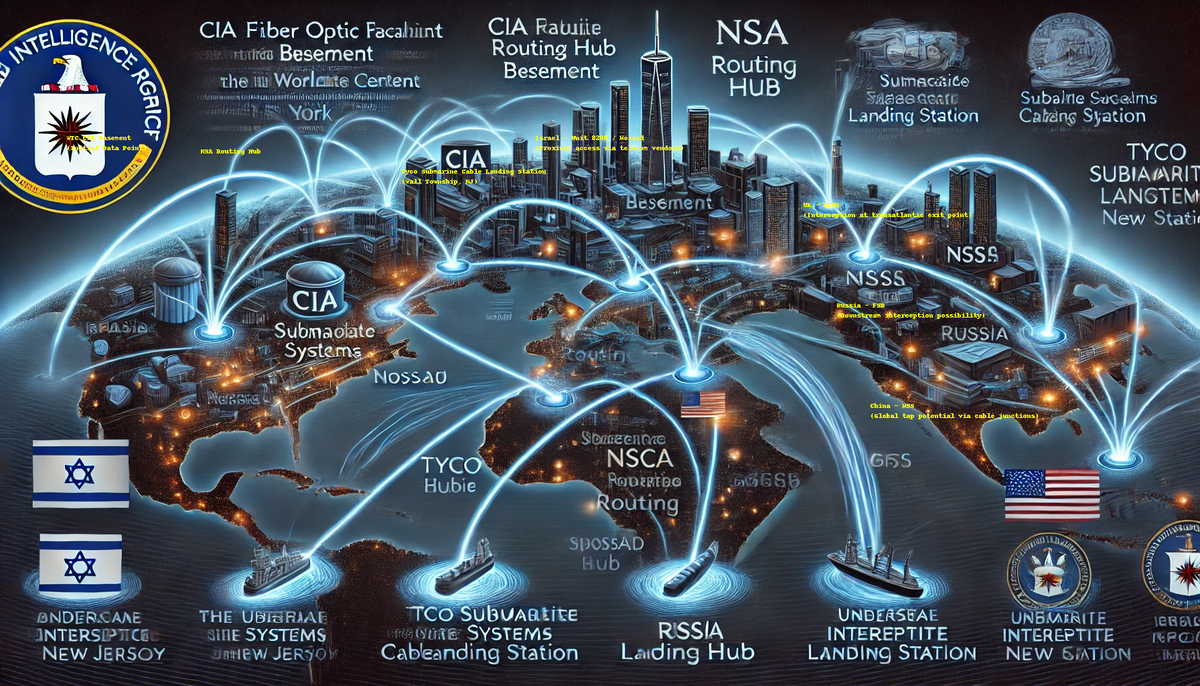
• Annotated Image of Fiber Optic Route & Foreign Actor Positions